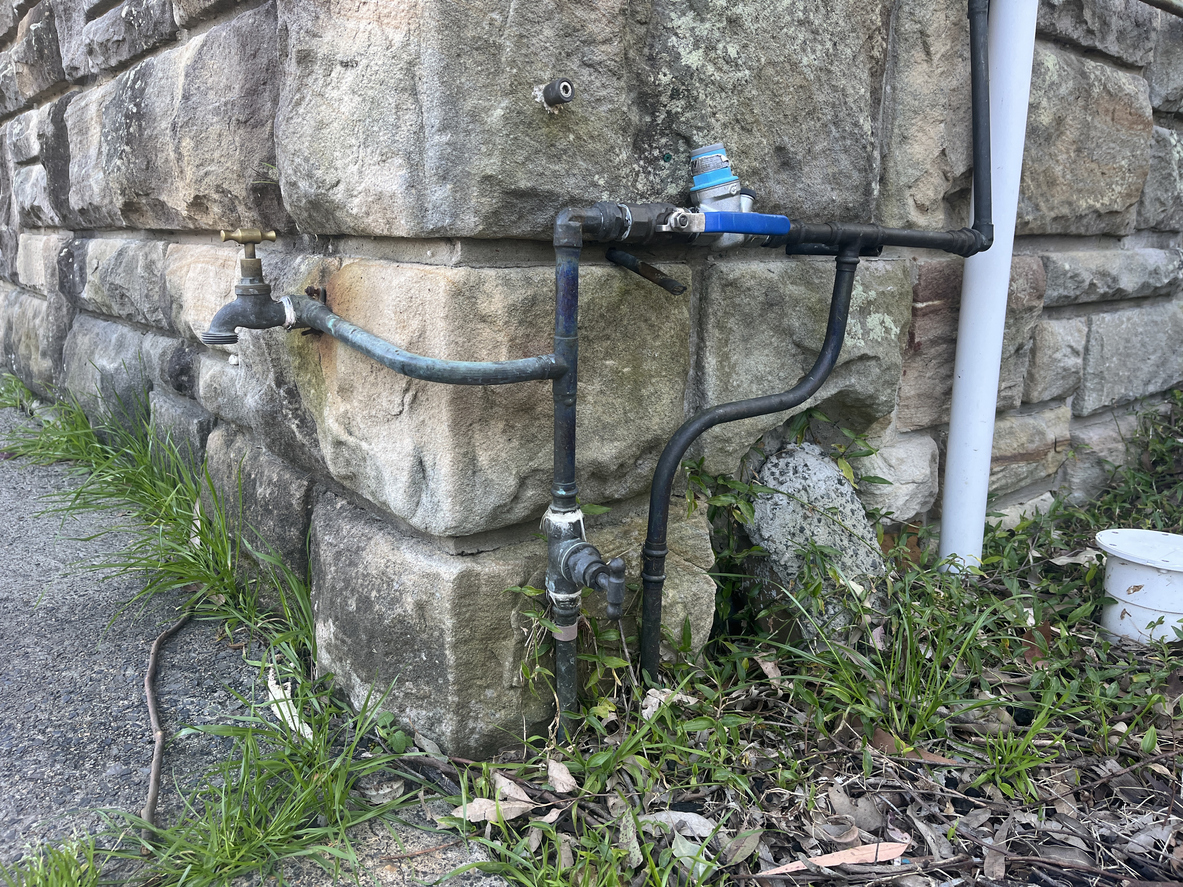
Outdoor Faucet – A Recent Job & Some Homeowner Tips
By Les, Owner, Bravo Initiative LLC
What I Walked Into
Earlier this month, I got a call from a homeowner in the Denver Metro Area who said they turned on their outdoor faucet for the first time this season and noticed water dripping inside near the basement ceiling. They weren’t using it all winter, so the problem caught them off guard.
When I got there, the outside of the house looked fine. The faucet itself didn’t show anything obvious at first glance. But once we turned the water on and checked inside, there was a slow drip coming from the pipe just behind the wall. That’s usually a sign something didn’t handle the winter as well as it should have.
The Problem
After taking a closer look, it became clear the outdoor faucet line had a small crack. This is something I run into pretty often in the Denver Metro Area after winter. Even when homeowners shut off the valve inside, a little water can stay trapped in that short section of pipe between the valve and the faucet. When temperatures drop, that water freezes, expands, and puts pressure on the pipe until it gives somewhere.
Most of the time, it’s not a big break. It’s a small split or hairline crack, but that’s all it takes.
The tricky part is that you don’t notice it right away. During winter, everything stays frozen, so there’s no visible leak. Then spring comes, you turn the faucet back on, and that’s when water starts escaping — usually inside the wall instead of outside where you’d expect it.
In this case, the leak was slow, but steady enough to start dripping onto the basement ceiling. You could see a small damp spot forming, and over time that would have spread. If it had gone on longer, it could have led to soft drywall, insulation damage, or even staining on the ceiling.
The Process
I started by shutting off the water supply to that line so we could stop the leak right away. Once the pressure was off, I opened up the wall just enough to access the section of pipe where the drip was coming from.
After exposing the line, the crack was easy to spot. I cut out that section and replaced it with new piping, making sure everything was fitted and sealed properly.
While I was there, I suggested switching to a frost-free outdoor faucet. The difference with those is that the shut-off point sits further inside the home, where it stays warmer. That way, water isn’t sitting in the exposed section of pipe where it can freeze.
Once everything was installed, I turned the water back on slowly and tested it. We ran the faucet outside while I checked inside for any signs of leaking. Everything stayed dry.
Before finishing, I checked the interior shut-off valve to make sure it was working smoothly, and I walked the homeowner through how to properly shut off and drain the line before winter next time.
The Outcome
Once everything was repaired and tested, the leak stopped completely. We ran the faucet a few times just to be sure, and there was no moisture showing anywhere inside.
The homeowner was mostly relieved. They had been worried there might be more damage behind the wall that they couldn’t see. Fortunately, we caught it early enough that it was limited to that one small area.
Over the next few days, the damp spot on the ceiling dried out without any further issues. They used the faucet again later that week, and everything worked normally.
From the outside, it looked like a quick fix. But catching it when we did made a big difference. It kept the problem from turning into something that would have required more repairs.
DIY Advice
Before I left, I walked them through a few simple things they could do to avoid running into the same issue again. I told them to turn on their outdoor faucets slowly in the spring and check inside right away for any signs of leaking. It’s also important to disconnect hoses before winter, since leaving one attached can trap water in the pipe and increase the chance of freezing.
I recommended using the interior shut-off valve before freezing weather hits and making sure the line is fully drained. After shutting off the water, it helps to open the outdoor faucet and let any leftover water run out completely. Then, when using the faucet again at the start of the season, just take a quick look inside near that wall or ceiling area to make sure everything looks dry.
They followed up later and mentioned they checked their other faucet and caught a small issue starting there too. Taking care of it early saved them from dealing with the same problem all over again.
Professional Insight
Outdoor faucets are one of the most common places for freeze damage, especially in areas like the Denver Metro Area where temperatures can drop quickly.
A lot of homeowners do the right thing by shutting off the valve, but if the line isn’t fully drained, by removing the hose, there’s still a risk. The damage usually isn’t obvious until months later when the faucet is used again.
Basic steps like draining the line and checking for leaks each spring go a long way. But if something seems off, it’s better to look at it early before water starts getting into walls or ceilings.
Closing Thoughts
This job was a good reminder that small winter damage doesn’t always show up right away. It often waits until spring when everything starts getting used again.
Taking a few minutes to check outdoor faucets at the start of the season can prevent bigger issues later on.
If you’re in the Denver Metro Area and you’re not sure if your outdoor plumbing made it through the winter, I’m always happy to take a look and make sure everything is in good shape.
– Les
[]
